Loading...
Serving Youngsville, LA and surrounding areas. (337) 483-1647
Youngsville's clay soils and high water table demand more than a standard pour. Get a properly prepared, permitted foundation built to stay level through every wet season.
Slab foundation building in Youngsville means pouring a reinforced concrete pad directly on prepared ground that serves as both the floor and structural base of your home, with site prep, plumbing rough-in, and inspection built into the timeline - most residential jobs are ready for framing within three to six weeks of permit approval.
In this part of Lafayette Parish, the clay soil moves with every wet-dry cycle, and the water table can sit just a few feet down after heavy rain. That is why proper soil compaction, a gravel base, and a vapor barrier are not shortcuts here - they are what keep your foundation level through years of south Louisiana weather. If you are also adding a covered patio or an outbuilding pad nearby, our concrete footings service covers those tied-in structures.
Every slab we pour is permitted through the City of Youngsville or Lafayette Parish, and we manage the inspection process from start to finish so nothing holds up your build schedule.
If you have purchased land in Youngsville and are preparing to build, a slab foundation is almost certainly what your builder will recommend. It is the standard foundation type here because the soil and water table make basements impractical. The question is not whether you need a slab - it is making sure the one you get is built correctly for your specific lot.
Small hairline cracks in concrete are common and usually cosmetic. But if you can see cracks wide enough to fit a coin into, or diagonal cracks running from the corners of doors and windows, the slab may be moving or settling unevenly. In Youngsville's clay-heavy soils, this kind of movement needs to be evaluated before it worsens.
When a slab shifts, the frame of your house shifts with it. If doors that once closed easily now drag or leave gaps at the top or bottom, the foundation beneath them may have moved. Multiple sticking doors and windows occurring together is one of the clearest early warning signs homeowners in south Louisiana notice before identifying a foundation problem.
After a heavy rain, walk around your home and watch where the water goes. If it flows toward your foundation and sits there rather than draining away, the grading is working against you. Over time, standing water saturates the clay soil, causes it to swell, and pushes against the slab edge - a problem that compounds with every storm.
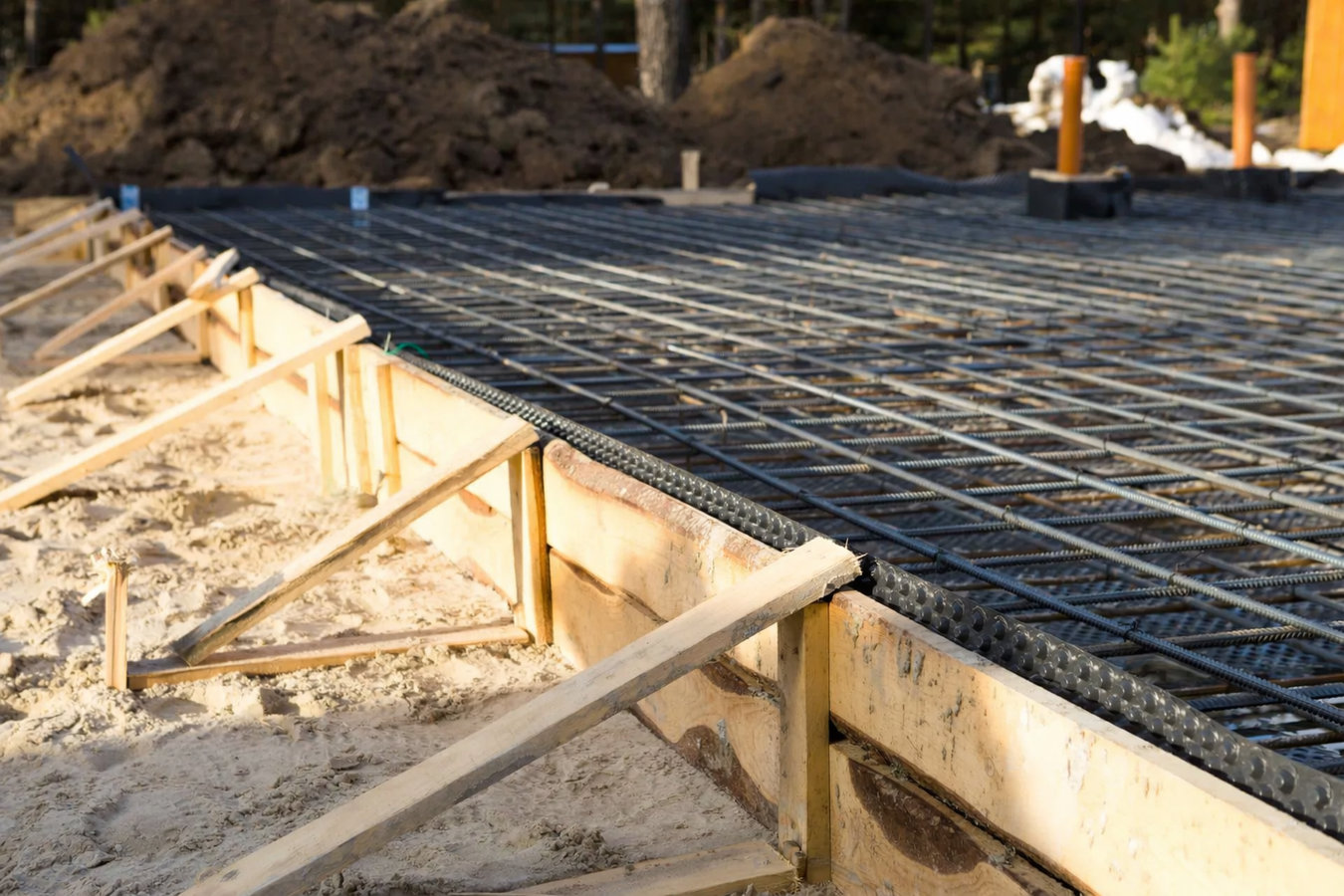
Our slab foundation building service covers the full scope of work from raw lot to an inspected, cured pad ready for framing. That includes site grading, soil compaction, gravel base and vapor barrier installation, steel reinforcement placement, the concrete pour, and curing management. For projects that need more structural depth - such as additions tied to an existing structure - our foundation installation service addresses more complex scopes involving fill, elevation compliance, and multi-phase construction.
We also coordinate with your plumber for underground rough-in before the pour, since those pipes are permanently buried once the concrete is down. If your project includes structural support elements for outbuildings or additions, our concrete footings work ties into the main slab system. Every permit and inspection is managed on your behalf - you receive the permit number before work begins and the signed inspection report when it passes.
Best for homeowners building a new home or addition on a Youngsville lot who need a fully permitted foundation from grade up.
Suited for detached garages, workshops, and accessory structures that need a standalone slab tied to local permit requirements.
Designed for homeowners expanding their footprint, where the new slab must connect properly to the existing foundation and soil conditions.
For properties in or near FEMA-designated flood areas that require the finished floor to meet a minimum elevation above base flood level.
Youngsville sits in Lafayette Parish on clay-heavy soil that swells when wet and shrinks when dry - and in south Louisiana, that cycle happens multiple times a year. What this means for your foundation is that the ground preparation step is not optional or superficial. Proper compaction, a gravel sub-base, and a well-placed vapor barrier are what keep a Youngsville slab from cracking as the seasons change. Contractors who come in from drier markets and apply standard practices often learn this the hard way. Our work in Broussard and other Lafayette Parish communities has given us a consistent read on the specific soil profiles and drainage patterns across this corridor.
The water table across much of Youngsville sits close to the surface - sometimes just a couple of feet down after a major rain event. Add in roughly 60 inches of annual rainfall and a growing number of lots built on filled ground in newer subdivisions, and the case for careful site evaluation before any pour is strong. We also verify flood zone status on every project. Clients in Lafayette have seen firsthand what happens when a slab is poured at the wrong elevation relative to the base flood level - higher flood insurance premiums and potential lender issues. We check your designation before we quote, not after.
We reply within one business day. We will ask about your lot size, the structure you are building, and whether permits are pulled yet - then schedule a site visit before giving you a written estimate.
We visit your lot to assess soil conditions, flood zone status, and grade before quoting. Once you approve the estimate, we pull the permit through the City of Youngsville or Lafayette Parish - you get the permit number before any equipment arrives.
The crew grades, compacts, and installs the gravel base and vapor barrier. Your plumber completes the underground rough-in and passes inspection. We then place the steel reinforcement before the pour date is locked in.
The concrete pour typically happens in a single day, scheduled for early morning to avoid south Louisiana summer heat. After at least seven days of curing, the parish or city inspector signs off - and your slab is ready for framing.
We handle the permit, manage the inspection, and give you the paperwork you need. No surprises.
(337) 483-1647Most of south Louisiana's foundation problems trace back to rushed site preparation on clay soil. We compact in layers, verify grade before the form work begins, and include a vapor barrier on every residential pour - because the ground movement here is real and predictable.
Youngsville has flood-prone areas, and a slab built at the wrong elevation can cost you hundreds of dollars a year in higher insurance premiums. We pull your FEMA flood map designation before we write the estimate, so the price you approve reflects what your lot actually requires.
We pull every required permit and give you the number before any equipment arrives on site. Louisiana State Licensing Board requirements apply to this work, and you can verify our license on the LSLBC website before signing anything.
Youngsville summers regularly push into the 90s with high humidity - conditions that can cause concrete to cure too fast on the surface and crack. We schedule summer pours for early morning and use active curing techniques so your slab finishes at full strength, not just full size.
Every slab we build in Youngsville is designed for the specific conditions on your lot - not a generic spec imported from a drier market. When the inspector signs off and framing begins, you have documentation that protects your investment at every stage after that.
More complex foundation scopes involving fill, elevation compliance, pier-and-beam options, and phased construction in Youngsville and Lafayette Parish.
Learn MoreStructural footings for outbuildings, additions, and load-bearing supports designed to tie into or stand alongside your main slab.
Learn MoreContractor availability in Lafayette Parish fills up fast - lock in your start date before the next rain delay pushes your project back.