Loading...
Serving Youngsville, LA and surrounding areas. (337) 483-1647
South Louisiana clay soil and flood zone requirements make foundation installation more involved than most markets. Get a site-specific estimate that accounts for your actual lot conditions.
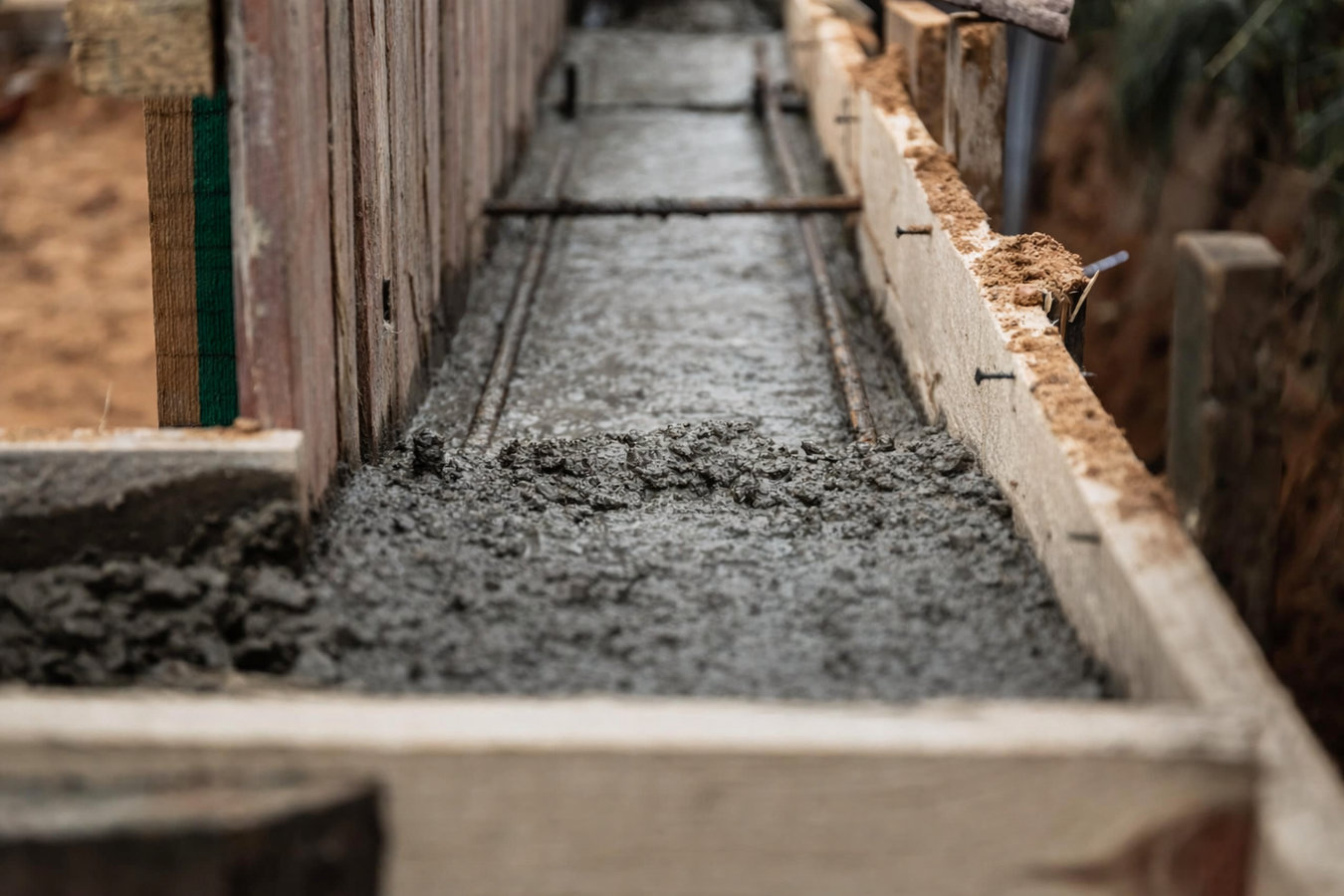
Foundation installation in Youngsville means clearing, grading, and compacting your site, bringing in fill material if your lot requires elevation above base flood level, pouring a reinforced concrete slab, and passing a Lafayette Parish inspection before framing begins - most projects go from permit to a framing-ready slab in two to four weeks under normal weather conditions.
What sets foundation work in this area apart is the soil. Lafayette Parish clay swells with every wet season and shrinks in dry spells, which means the preparation phase is where the quality of your foundation is really determined - not the pour itself. If you are planning a new home and want to understand how the full foundation system connects to your structural support elements, our slab foundation building page covers the detailed scope for new residential pours.
We handle the Lafayette Parish permit process from start to finish. You receive the permit number before any work begins and the signed inspection report once it passes - documentation you will need for your lender, your insurer, and eventually your buyer.
The clearest sign is simply that you have land and a plan to build. In Youngsville's active new-construction market, foundation installation is the first major step after permits are pulled, and the soil and flood zone conditions on your specific lot determine how the project needs to be scoped.
Diagonal cracks running from the corners of door frames or windows are one of the clearest signs that the ground beneath your slab has shifted unevenly - a common result of Youngsville's expansive clay soil going through wet and dry cycles. If the crack is wide enough to fit a quarter into, or if it is growing over time, a professional assessment is needed.
When a foundation shifts, door and window frames shift with it. Doors that used to close smoothly start sticking, dragging, or swinging open on their own. This is especially worth noting after a particularly wet or dry season - one sticking door might be humidity, but multiple doors and windows behaving strangely at the same time points to foundation movement.
If rainwater consistently runs toward your house rather than away from it, your foundation is being exposed to far more moisture than it was designed to handle. In Youngsville, where heavy rain events are common and the soil does not drain quickly, standing water within a few feet of your foundation after a normal storm is a sign the grading - and possibly the foundation - needs attention.
Our foundation installation service covers the full project from raw lot to an inspected, cured foundation ready for framing. That scope includes site assessment and flood zone verification, soil compaction and fill material placement, forming and reinforcing, the concrete pour, curing management, and permit and inspection coordination with Lafayette Parish. For homeowners whose build also requires structural supports for additions or tied-in outbuildings, our slab foundation building service handles those specific scopes.
We also work with your plumber to time the underground rough-in before the pour - because once the concrete is down, those pipes are buried permanently. For projects in actively growing parts of Youngsville where commercial-adjacent pads are being developed, our concrete parking lot building service handles those larger paved areas that sit adjacent to foundation work. Every project we complete comes with the permit, inspection sign-off, and a record of what was built - documentation that protects your investment at resale and with your insurer.
Full foundation installation for new residential construction, from site grading and fill through the permitted pour and Lafayette Parish inspection.
For properties in FEMA-designated flood areas that require the finished floor to meet or exceed the base flood elevation, reducing long-term insurance costs.
For Youngsville homeowners elevating or rebuilding their foundation after flood damage, including coordination with FEMA mitigation program requirements.
For homeowners whose lot conditions, access requirements, or design preferences make raised pier-and-beam construction a better fit than slab-on-grade.
Youngsville sits on alluvial clay and silty soils that absorb water and expand, then dry out and crack - and south Louisiana's rainfall patterns mean this cycle repeats constantly. A foundation that was not designed with that movement in mind will show problems within a few years, regardless of how clean the pour looked on day one. Proper layered compaction and a well-designed sub-base are not upsells - they are what determine whether the slab stays level through a decade of wet seasons. We work regularly in Carencro and surrounding communities, and the same clay-soil dynamics apply across this whole corridor.
The flood zone issue is equally important and often misunderstood. A meaningful portion of Youngsville and the surrounding Lafayette Parish area falls within Special Flood Hazard Areas, and if your lot is in one of those zones, your foundation must be built to a minimum elevation set by FEMA flood maps. Building at the right height affects your flood insurance premium for the entire life of the home. We check your property's flood designation before we write the estimate - not after you have already committed to a scope. Homeowners in Lafayette have seen the difference that pre-quote flood zone verification makes in avoiding mid-project cost surprises.
We ask about your lot size, address, and whether a survey or site plan exists. Most contractors in this area will schedule a site visit before giving a firm number - in Youngsville, soil conditions and flood zone designations can vary significantly from one street to the next.
We visit your lot to check grade, soil, and flood zone status, then write an estimate that reflects what your specific property actually requires. Once you approve it, we pull the Lafayette Parish permit - you get the number before any equipment shows up.
The crew clears, brings in fill if needed, and compacts the soil in layers to reduce settling risk. Forms and steel reinforcement are set after plumbing rough-in passes inspection. In Youngsville's soft clay, this phase takes more care than drier markets - rushing it is where most foundation problems start.
The pour typically happens in one day, scheduled for early morning to manage south Louisiana heat and humidity. After at least a week of curing, a Lafayette Parish inspector reviews and signs off. You receive the inspection report - ready for your lender, insurer, or future buyer.
We check your flood zone and soil conditions before we quote - so the number you see reflects what your project actually needs.
(337) 483-1647One of the most stressful mid-project surprises is finding out your foundation needs to be higher than planned - and that the elevation requirement has changed the cost significantly. We pull your FEMA flood map designation before writing the estimate, so the price you approve covers what your lot actually requires.
Foundation problems in Lafayette Parish most often trace back to insufficient compaction on clay soil. We compact in measured layers, verify grade before form work begins, and do not skip the gravel base and vapor barrier - because the soil movement here is consistent and the preparation is what determines long-term results.
We handle the Lafayette Parish permit process on your behalf, from application through final inspection sign-off. You get the permit number before equipment arrives and the inspection report when the slab passes. That documentation is yours to keep for your lender, insurer, and any future sale. We follow National Association of Home Builders standards for residential foundation work.
Youngsville summers push into the 90s with humidity that accelerates surface curing - which leads to cracking if the pour is not managed carefully. We schedule summer pours for early morning and use active curing techniques to protect the slab through its first critical days, not just its first hours.
Every foundation we install in Youngsville is scoped for your lot - not pulled from a generic template. When the inspector signs off and your build moves forward, you have the paperwork to prove it was done right.
Commercial-adjacent paved areas and large concrete pads that sit alongside or connect to new foundation work in Youngsville.
Learn MoreNew residential slab pours for Youngsville homeowners building from a raw lot, including plumbing coordination, reinforcement, and permit management.
Learn MoreWe handle permits, inspections, and flood zone requirements - so your project starts right and stays on schedule.